Monday, August 22, 2011

Sheep Hunting...Wolverines and Weather Pt.1

I'll pick up the narrative where I left off in my last post, "Scouting for Sheep" so the reader is advised to read up on that before they continue.

After establishing our cache of food in the rocks we made plans to hike in to begin the hunt on Monday in anticipation of the Wednesday opener. All evening I packed and checked and got my gear in order- without substantial food or my heavyweight tripod my gear weighed in at 51 pounds. My new hunting partner arrived right on schedule in the morning and we departed for the hunt area which I'll refer to in the best sheep hunting tradition as "XXX Creek". Arriving at XXX Creek we were surprised to find another pickup parked there- it seemed awfully early for someone to be walking in to begin a hunt considering we thought we had beaten everyone to punch ourselves. With our food stores already cached at the head of the drainage we had no choice but to continue as planned-regardless who might be sharing the drainage with us. 

The initial ascent went slowly given our heavy loads of equipment and we were much relieved to to finally break free of the treeline. At the tree line the trail to the top turned painfully up- gaining over 1000 feet in elevation in a little over a quarter of a mile. We cautiously climbed inch by painful inch up the slope watching our footing because a tumble over the edge with our unwieldy packs would result in a long fall on broken rock only to be stopped by being strained through the brush. An errant piece of scree inadvertently knocked loose reminded us just exactly how far down the mountain we would fall if we misjudged our footing. The crashing went on for what seemed an eternity as it bounced down the scree chute and through the brush.

When we finally summited the scree chute we were rewarded with a wonderful vista and an alpine meadow full of fresh sheep scat. Things were certainly looking up. We decided to place camp in a sheltered rock structure a couple of miles away on the top of the ridge that might give us some relief from the relentless wind. When we were placing our camp it was obvious we weren't the first sheep hunters to shelter in the fortress of shale- decades of sheep hunting in the area had left few places like this secret. I turned over a piece of flat shale to weigh on a shallow tent peg and found an empty C-Ration can. Even Frank Glaser (see Alaska's Wolf Man), a pioneering market hunter from the turn of the last century had written about this drainage, hunted sheep here, and established a roadhouse a few miles to the south.

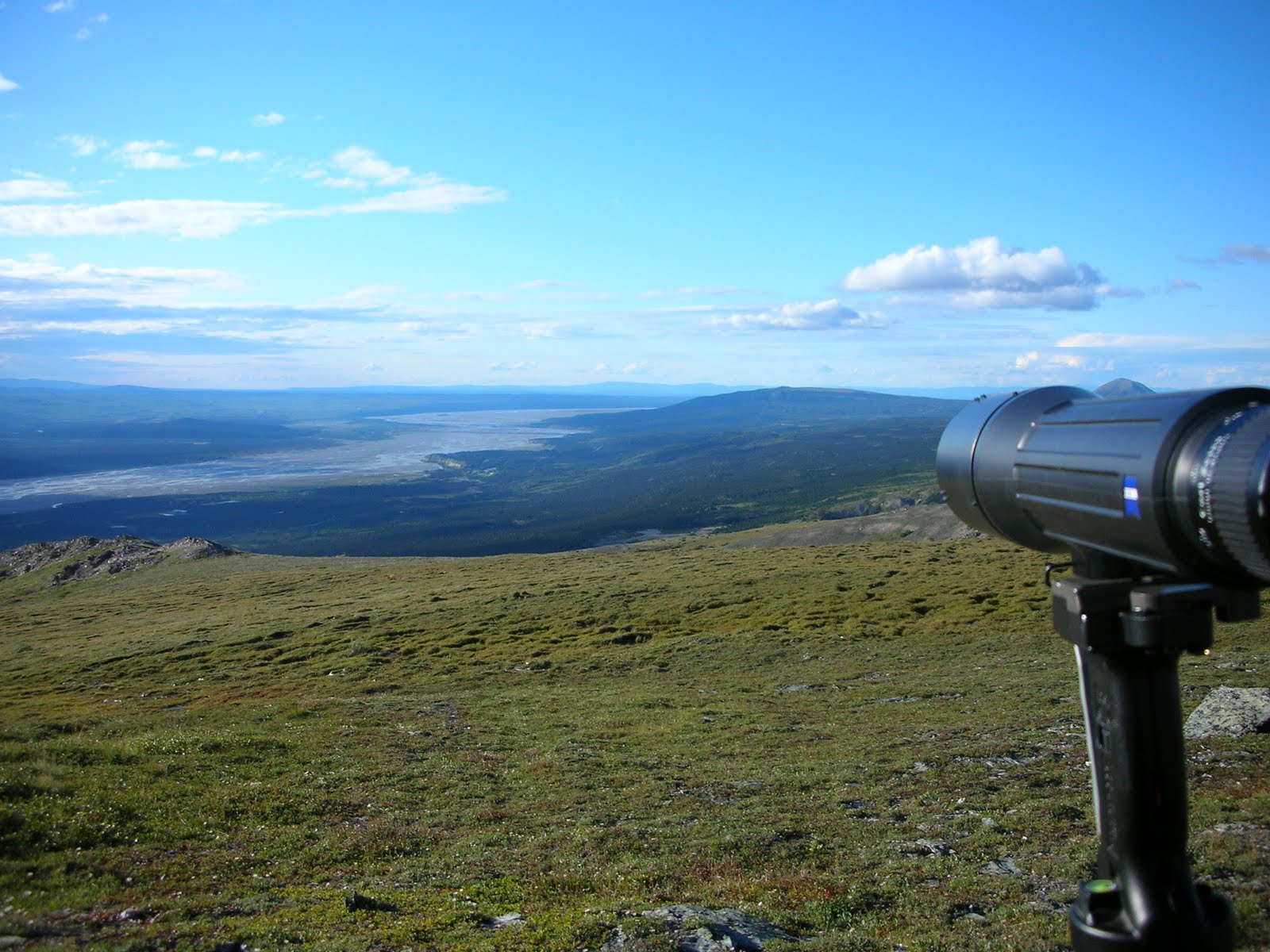
With camp established we turned out attention to the business at hand- finding a legal ram to shoot on opening day. We donned light packs- just snacks and optics- took rifles in hand and set off to the east toward a promising ridge between both points. Sheep hunting is a game of optics- while sheep are readily visible miles away in their white coats judging a ram is a game of extreme patience. Every half mile or so we'd set up the scope and spend at least half and hour scouring the cliffs and meadows looking for a ram.

As the afternoon wore into evening the sheep became more active and began an evening feed. Suddenly, as if rather unexpectedly a small band of rams wandered over a bluff a mere half mile away. We quietly sequestered ourselves in the rocks and looked them over intensely with the Zeiss glass. I've often wondered if the rams could feel our gaze as we concentrated on them as intently as any "spoon bender". The band contained just three rams- two immature rams who were quite obviously not legal and one grand old ram who favored showing us his left side.

That left side was broomed heavily and what few glimpses we got it  appeared either full curl or slightly broomed. His bases were very large for a sheep younger than 8 years old. A legal sheep either has to be full curl on either side or broomed on both -so either of those conditions would make this guy legal...on Wednesday morning. We changed priorities immediately, no longer looking for a legal sheep we now decided to quietly bird dog this guy for the next two days until the season opened.

We followed him the rest of the evening from a mile out, desperately trying to stay down and out of his line of sight. Since sheep have vision the equivalent of 8x binoculars that's not the easiest thing to do but we appeared to be avoiding alarming the sheep as they finished their evening graze at leisure. We then followed them another half mile until they were ensconced in some steep cliffs to bed for the night and chew their cud. A faint hint of cloud began to pour through the pass to the south but we gave it little thought since the weather had been perfectly clear with bluebird skies and just enough breeze to keep the bugs at bay.

Retiring to camp at around 11:00p we watched a band of 6 caribou bulls with massive racks and shovels make their way over a ridge a mile distant as we ate our freeze dried dinners and drank a cup of coffee. The sky turned a wonderful shade of pink as the setting sun reflected off the braided river 4000' below.


Life was good. Very Good. But nothing scares me like a good day since the law of averages never sleeps.


To be continued....

Sunday, August 7, 2011

Scouting for Sheep

I know its been a good while since I've posted but I've got a good excuse...I've been roaming over hill and dale looking for a likely spots to sheep hunt. Putting together a sheep trip isn't exactly a difficult undertaking but it can be a challenge to line up partners, equipment, schedules and get it all into an area likely to contain a ram.

Given my planning bent I had most of this stuff arranged well ahead of time but as the adage goes a well thought out plan just gives you a place to change it from when it falls apart.

And fall apart mine did.

My plan included a 9 mile mountain bike ride followed by a 4 mile 2500' climb to put us into great sheep country. My party included two friends that I'd hunted with several times before but I was the only guy with a sheep tag. One of my companion was just in for the trip and the other was looking for a nice Interior grizzly. The "in for the ride guy" cancelled on Monday, the grizzly hunter on Tues...rats. In the meantime, I had been contacted by another hunter from the state who's partner had cancelled out last minute on him as well.

A leery as both of us were about arranging a hunt with a total stranger we agreed to meet and discuss the possibility and see if we thought we could get along on a strenuous hunt together. As luck would have it, we found ourselves well matched as hunting partners with similar levels of experience, fitness and objectives for the hunt. That just left us the logistics.

Equipment was no issue, we had that covered in spades- it was a short matter to arrange who had the better of a particular item and split it up. As far as area is concerned we were in trouble. Both of our plans had included packing in a long distance and having a partner (or two in my case) to help ferry the weight back out- since we both had tags the task of hauling two sheep among two hunters was a far cry from one split three ways or even among a pair of hunters.

We looked carefully at the map and looked for other likely areas that were perhaps closer to the road system- identified a couple and made plans to hike in, scout the area and cache some of our camp. We visited the first of these over the weekend.

The initial climb in was along a rugged goat path of a trail that quickly rose through the tree line (1000' vertical in 1/2mile) and terminated midway on a rocky face. At that point one turns and heads up, scrambling on fours up the scree for perhaps another 200 feet until you hit another goat track of a ledge skirting over the top of three slot canyons. Another 200 foot or so scramble up a chimney choked with deteriorating shale and you pop out in a likely looking alpine bowl on a long semi circular ridge rimming a drainage. Exhausted under heavy packs this looked a likely spot as any we'd seen- discovering sheep scat in the meadow proved the sheep had at least been here. We followed the ridge for another mile and cached our gear under a short ledge.

The weather had been deteriorating all day and now in late afternoon the wind screamed along at 50mph and carried a few drops of rain. Completely exposed to the brunt of the wind on the barren mountain was something to experience akin to sticking your head in the jet stream. As we picked our way back down the bowl I glanced across the drainage and detected movement through wind-teared eyes..."What is that? Do you see that movement?" I asked in a shout to be heard over the gale.

"I do...they're sheep", said my new partner- now beaming with excitement. Over the next fifteen minutes we watched transfixed as an entire band of sheep filled the adjacent bowl (on the lee side of the ridge) to escape the howling wind and began feeding there. Looks like sometimes despite meticulous planning its still hunting and we were doing alright. Not that I'm much of a believer in luck, but I do hope that what passes for it holds out for opening day when we hope to be in the drainage with a couple of likely rams in our sights.

Tuesday, July 19, 2011

1st Memorial Fishing Trip Report or....The Mysterious Island

The alarm went off much earlier than I wanted it too that morning. I was still groggy from a late arrival after driving in to Valdez late the night before. The road down, while mostly devoid of summer traffic, was undergoing construction and what wasn't undergoing repair needed it badly. To top it off it rained all the way down too. I got my groggy bones out of bed, grabbed a quick shower and wandered down to the lobby in search of coffee. I got several stares as I placed my "Big Man Mug" under the caffeine spigot and let it roll- bypassing the Styrofoam shot glasses most of the other patrons had used. Sufficiently fueled I zipped my jacket and strolled out of the hotel into the Valdez harbor. Looking suspiciously at the sky with one scowling eye- I drank back a long slug of the hideous brew. It looked like an awful day for fishing.

I stopped by my rig and shouldered my pack with all my gear and checked the note in my pocket with the slip number written on it- and headed for the correct boat where hopefully my companions would be joining me. A few minutes later I arrived  on time and checked in with the skipper of the boat. Today's shark charter would have 6 of us on a 28' boat- 4 fisherman, a deckhand, and the skipper. Colloquially called a "Six Pack" in these waters it was a pretty standard configuration albeit older and showing considerable wear and tear; room for 4 to fish from the back, a small head and cuddy cabin below forward, elevated con in the middle under a canvas top. This boat was named the Swifty and the two massive 300 horsepower outboards hanging off the back should be an indication that the boat was aptly named. Since I was the last to arrive on board I presented my fishing license to the captain who recorded my information and we were off to the fuel dock to take on fuel and more coffee.

The captain was a friendly enough sort, apparently to hear him tell it one of the foremost shark men in the Sound (more on that later) and as we motored through the "No Wake" zone out of the harbor gave us the standard safety speech and let us know that we would be making the run out to Hinchinbrook Island in pursuit of salmon sharks. The weather was looking rougher by the moment and I was happy to have new rain gear and a total lack of predisposition to seasickness. My companions for the trip were a couple of coworkers and friends, Gary and Dan, as well as Dan's longtime girlfriend Jenny. We all made ourselves more or less comfortable on the aft deck and as we drifted past the buoy the captain fired the starboard engine and pushed the throttles forward. Swiftly was apparently correctly named and as the captain planed out the boat we were streaking across the water past the hulking trawlers working the run of pink salmon in the bay.

Two and a half hours later after crossing a large chunk of the Gulf of Alaska we drifted to a standstill over some unknown underwater structure where the captain told us was a good spot to fish for sharks. According to the radio chatter on the marine set the boat moored a half mile west was none other than Larry Csonka, who was busy trying to catch sharks for his North to Alaska television program. We rigged two marine "big game" rods with huge Penn deep sea reels with steel leaders and dual hooks. The bait was a whole pink salmon-one hook through the gut and one through the head. Anything the size of a shark that hit this bait would be very likely to be secured onto either or both of the large circle hooks.

We ran the two rods off the aft and affixed proper weights to both and rigged the starboard one to run relatively deep and the port to run shallower to present a bait to sharks cruising at either depth. We quickly established a batting order for who would fight the first shark and began cruising slowly with the bait deployed. The skipper explained that sharks would normally hit a bait hard in the middle resulting in a sharp jerk to the rod and we should call out- allowing him to cut the engine. The shark would then apparently be satisfied that the initial strike had killed his target and then proceed to eat it- tail first and impale himself on the forward facing hooks. It sounded like a perfect plan.

With one exception. No one had informed the sharks that this was a participatory sport on their part.

After an hour of cruising- slowly pulling the bait- we stopped and readjusted, checked weights, and changed depths. The formerly enthusiastic and chatty captain was now somewhat crestfallen and oddly silent- driving the boat in a course and chain smoking cigarettes. The deckhand went below and fell asleep.

It started to rain.

Being "on deck" with Gary "at bat" I was not expecting any monster fish fighting action anytime soon so I went below decks and donned my rain gear and retrieved my camera and went above to study the shoreline of Hinchinbrook hoping to spot one of the islands fabled monstrous bears. The whisper thin beach rose sharply to thick maritime temperate rain forest, thick and dark and then continued steeply up into the low lying cloud bank with occasional rocky peaks sticking above. The rain and dark appearance of the island coupled with my knowledge of the bears lurking within gave the entire coast a feeling of Jules Verne's Mysterious Island. A recently marooned boat laying cracked open on the beach completed the picture.

It started to rain harder.

Another hour of trolling for the non-starter sharks and the captain called a meeting on the cramped deck. While the adage "A bad day fishing beats a good day working" is certainly true- it does however overlook the perspective of a chartered fishing captain. A boat full of paying clients getting skunked and soaked to the bone in the process was not good for business. With fuel at over $4 a gallon and expenses piling up a boat captain simply must return happy (well tipping) clients to the dock with whopping piles of fish to just stay financially afloat. And skunked fishermen don't tip. In this new era the number of charter boats in Valdez is half of last year and that is half of the year before. When charters cost $100 a day and fuel ran a $1.50 per gallon the captains had a booming business- now with limits tights, fuel sky high and costs astronomical- the price had risen to the point die hard fishermen who once might have chartered several times a season would now go once. The folks who might charter annually were now going every two or three years and the other folks who might try a once in a lifetime trip weren't going at all. The skipper was desperate for the grizzled and unhappy folks before him to reel something in.

"I know a spot, about 4 miles away where the tide line runs we can catch some huge halibut if you guys are willing to give up and sharks and go for flat fish" the captain proffered. I was not impressed but I decided that continuing to keep doing what we were was going to just be unproductive and I cast my vote- "I'm in." The rest of the folks quickly added their vote- anything was better than driving a boat in circles under a pouring raincloud with the only fish on the line a dead one used as bait. I was skeptical of the skipper's claim- it smelled of desperation but my own foul mood on this failing adventure occurring on the anniversary of my father's death may have colored my judgement. At least a little.

A few minutes under the Swifty's considerable power and we were there- anchored off the shore in deep water with a ripping current rushing under the boat. At precisely 2:05 the tide turned and the boat swung on its anchor and we dropped lines with generous chunks of salmon on circle hooks with three pound weights down to the bottom. Even the rain cloud that had drenched us for hours moved on to the west, leaving us a little sun. Within moments Dan had cried out, "Fish ON!" and just a few moments later had a thirty pound halibut next to the boat. It was hooked just barely and the skipper urged Dan to let it get off and escape- "That's a real little one for this spot," he said. "Ok", replied Dan (just a little defiantly I thought) and let his line go slack. The wriggling fish flipped his tail and disappeared in the black water. I was hoping that wasn't the only thing we caught.

Something that only happens once in great while at that moment began to happen. Like a mathematical equation that equals more than the sum of its parts, a planetary alignment, a magic trick the amazes even the magician- the current, the fish, the temperature, yeah even God Himself smiled on us and a wave of fish ran under our boat that defied imagination. While the skipper would certainly say the result was his knowledge and expertise, I'm not so sure (not to discount the skipper's skill) that it wasn't the benevolence of a higher power on a much needed occasion.

We caught fish.

Not just caught fish...miraculously caught huge fish. Gary cried out with a grunt, caught by surprise he managed a muffled "Fish on" but the screaming drag of his reel drowned out his call as a monster of a fish ran with his bait. I quickly reeled mine in to give him more space to fight his clearly giant fish. A well over six feet and powerfully built, Gary fought this fish for twenty minutes of huffing and sweating and a truly massive fish surfaced by the boat- the captain quickly harpooned the fish to anchor it to the boat and reached for the bang stick as the deckhand pulled it alongside. A swift motion and the power head contacted the fish just over the region of the brain- the .38 Special shell exploded and the massive fish went limp in the water. Fish of this size are never pulled live into the boat- their struggles could easily destroy equipment of injure shipmates. A power head made swift and humane work of killing the fish. Several gaffs were placed in the fish's giant jaw and it took three grown men to haul it over the side of the boat.

No sooner than we took photos and admired the size of the barn door than Dan cried out "Fish on!" and the scream of his drag reel carried over the water. Dan fought the fish while the deckhand and I wrestled Gary's massive fish into the fish hold. It was so large its tail had no choice but to hang out under the door. Dan landed his fish and the power head once again went to work and another fish was added to the hold. My rod  gave a severe jerk and I began to fight another large fish as they hauled Dan's over the rail. A few minutes later I had it near the side and the captain (whose stock had risen considerably at this point) harpooned it and dropped the power head expertly on the fish's skull. The firing shell made a loud pop (much like a cardboard box being dropped from a height onto concrete) and the fish went satisfyingly limp. The bullet doesn't have to hit the brain as the most destructive force is the gas and shock of the power head essentially venting into the fishes body cavity. We hauled it up into the hold just as Dan took over fighting another fish for Jenny, who had exhausted herself fighting another fish.

I stepped back and contemplated what was happening...we had three large fish that any one would have been the pride of any boat on the water and then Gary hooked into another one! I took over reloading the power head after the captain had popped Jenny's fish and hurried over to harpoon Gary's second one. No sooner had I slipped it back into the rack than Dan called out for it again! The poor deckhand was pulling in fish right and left and had a hard time keeping up with all the fish hitting the boat. It was glorious. I reached out to take my rod as my second fish hammered it, bending the rigid rod nearly double. Thirty exhausting minutes later I had my second fish to the side and the harpoon was jabbed- the blow missed home and the fish ran for the depths a second time. My aching muscles screamed pulling a second hundred pounder up from the depths...the exhausted fish finally yielded to the exhausted fisherman and this time the harpoon struck home. The power head once again popped and another fish went into the hold after being wrestled aboard.

Jenny was fighting another huge fish and after a valiant effort yielded the rod to Dan who fought what would be a huge skate to the surface. We released it and the Dan's reel shrieked to life and an exhausted Jenny took over and held the fish for an exhausted Dan before he began reeling in his second fish. At this point we all had two fish (the daily limit) except Jenny whose reel came to life again- she wrestled a twenty five pounder aboard with the help of the deckhand. After raising fish hold door we saw there was simply not room for the fish in the crowded hold. "Oh heck, its just a baby compared to the others." she exclaimed, "just let it go!" The deckhand complied by placing the still wriggling and yet unharmed fish back into the water and what would have been the highlight of many of my trips slipped back happily into the dark water  and headed for the bottom where it lived.

It was four o'clock and we had limited a boat of anglers with consistently large fish- simply unheard of these days. The skipper, smiling ear to ear- his bragging rights among the other skippers secured, helped the deckhand collect our gear and turned the boat toward home. Gary's monster would weigh in at the dock at 150.6 pounds and the aggregate weight of our seven fish would be just over 650lbs, an average of 92 pounds- each! Gary remained in Valdez overnight to pick up our fish from the processor- 303 lbs of processed filets. A winter's supply of fish for our families. It was incredibly gratifying to see the boys struggle up the ramps with two carts full of fish. I was thankful for the fish and a sea adventure story worthy of telling in remembrance of my Dad.

Thursday, July 14, 2011

The 1st Memorial Fishing Trip

As many of my regular readers are aware, today is the first anniversary of the death of my father. While it is a sad milestone, it is also one that I feel I need to remember in a special way. My father lived a life of no regrets- he was a consummate adventurer with a passion for machinery, motorcycles and the sea. In fact, I've often credited my own substantial wanderlust to his DNA as well as general fondness for things that generate torque and recoil. Undeterred by what others saw as limitation- my father pursued all sorts of things- never with the reckless abandon that marks the irresponsible man but rather a calculated risk taking meant to broaden his horizon and yield more experience from this life. I could tell all kinds of things about him- race cars, motorcycles, private pilot, mechanical genius, travels abroad, but this story is about the sea.

As a young man frustrated by college studies he signed up for the Navy, left the hills of East Tennessee and headed out to sea. Some of my favorite photographs of my father are from his Navy days- many years before I was born. They show a much younger man- exploring new places, showing off a new tattoo, fishing from the aft end of a Naval destroyer, swimming in the deep water while anchored in the middle of the Atlantic. His Navy days were something of a carefree life-  full of adventure, a BSA 650 Lightning motorcycle, Mediterrean ports and my Mom if the picture albums do an adequate job of storytelling.

As a child, family vacations  frequently took place near the ocean- Virginia Beach, Kure' Beach, Hilton Head, Destin, Hawaii, Puerto Valerta. If a vacation didn't involve the sea as far as my Dad was concerned- it was a waste of time. He frequently took deep sea fishing trips with coworkers and later as a company owner sponsored many fishing charters for his employees despite being located hours from the ocean. I also remember one rather humorous adventure that nearly involved my family relocating to Florida- I was only spared that horror by unusually low local wages and a monstrous hurricane that had my Mom packed in the car with my sister and I and a statement that it was leaving in five minutes whether he was in it or not!

So to honor my Dad's love of the sea and adventure, I've decided that on the anniversary of his passing I would mark the occasion by travelling to Valdez, where several companions and I have arranged to pursue some of the most exciting big game fishing Alaska has to offer- the Salmon Shark. By the time this is posted, we will have boarded the Swifty and will be venturing out into Prince William Sound after these wonderful creatures. I think my father would approve.

Photo from Wikipedia Commons

Wish us luck- story and photos to (hopefully) follow!

Tuesday, July 12, 2011

Atypical Results

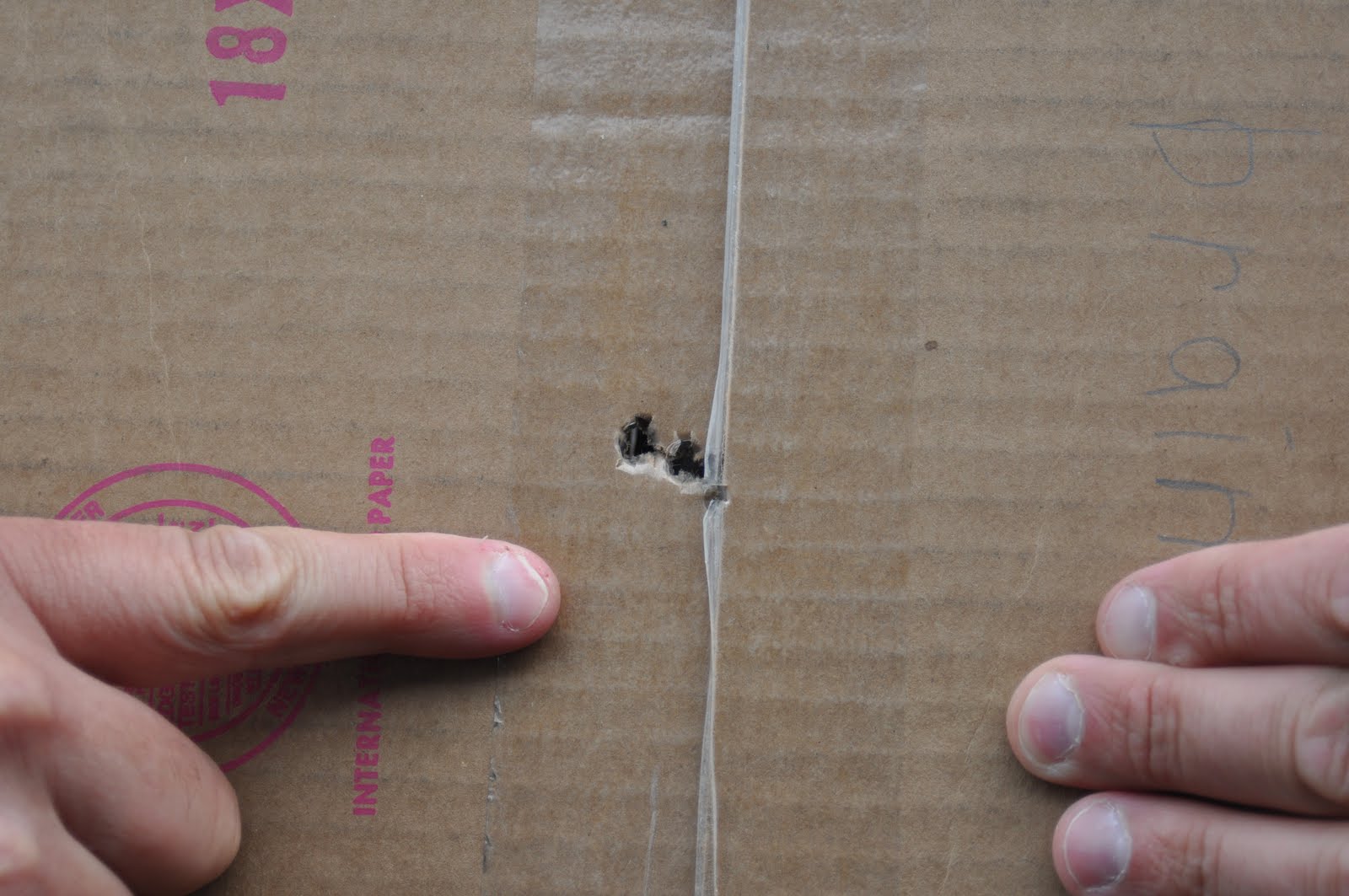
I've been doing a bit of reloading over the last couple of weeks and really practicing with my hunting rifle. Here's a series of photos that show some atypical results achieved one rainy and overcast day at the range.
Loading up...

Prone position...

5 shot group...

One happy camper! Look out sheep!

Sunday, July 3, 2011

Hornady Lock-N-Load AP Review or....Rollin' Yer Own.

A few months ago I was given the opportunity to review a new reloader from Hornady. While I've used many of Hornady's ammunition products over the years, reloading for rifle cartridges is something I'd never tried. With a couple of choice tags in my pocket for this fall's hunting season (including a coveted sheep tag!), I was delighted when my number came up to have the chance to review this reloader. Special thanks to the great folks at Outdoor Blogger Network for setting up these opportunities. As a note, while I don't normally do many gear reviews at all, this one is one of the rare ones where I've been provided the equipment by a manufacturer in exchange for a written review. Hornady provided the press and I purchased all of the ancillary equipment so it isn't like I don't have any "skin in the game" myself. As a note of apology, this review is pretty tardy by OBN's standards- all I can say is all those ancillary devices are a bit hard to come by here but some persistence and a couple of trips to Fairbanks and some back ordered mail order parts took care of it nicely (albeit slowly on my part). So with the introductories taken care of...on to the review.

In anticipation of doing the review, I did a bit of research and picked up a reloading manual so I could at least be familiar with the process ( I should have looked at the publishing date, more of that later). I had done a little reloading for pistol cartridges many years ago when I was an avid IDPA competitor so I was roughly familiar with the overall concept but I had my reservations about making ammunition that runs in the 65,000psi range rather than the much lower pressures of pistol ammunition. I needn't have been concerned, when I unboxed the press the first thing I noticed was a DVD lying right on top. So before burying into the packaging I actually did something rather rare for men in general and myself in particular- I watched the instructions....first.

While most of the attempts at video instruction manuals are usually little more than a spokesman referring a guy back to the manual for anything more complicated than opening the box; this one had a spokesman who showed me step by step how to set up the loader, for pistol cartridges. While the best video instruction I've seen to date I do wish they had included a segment on setting up for rifle dies, but that's more personal wish list than criticism. The instructions with the press and dies were more than adequate for the task. In my search for reloading accessories my wife came across a well loved but sturdy metal desk at a yard sale- $5 and it was in my van and destined to be my new loading bench. Setting up the bulk of the mechanicals was relatively simple requiring few tools other than a power drill, a couple of wrenches and some 5/16" hardware. All of the tooling required for working on the actual press itself (mainly hex keys) was thoughtfully included in the box.

With the press solidly in place I moved on to setting up to load my primary hunting rifle- a .300WSM. The reloading manual I had was apparently out of date since it had no .300WSM load data in it at all. While still relatively new I would have thought 10 years would have garnered it a spot in the load book but alas, in the Far North load books must move slowly from the shelves. Of to the Internet in search of data and I found it in abundance at most of the powder manufacturer's web sites. As a note of caution- I did find scads of data on Internet forums but I'll caution the reader that it's buyer beware. Some of those folks may be master reloaders with thousands of dollars in equipment and a lifetime of experience but I wouldn't count on it. They could just as easily be a "mall ninja" or "Internet B'wana" who just casually suggested that you overload your cartridge by 15% like they're a regular authority on the subject. So despite what you see, read or hear- I would avoid any load data not provided by a manufacturer of either bullets (Hornady, Speer, Barnes, Nosler, etc) or gunpowder (Alliant, Winchester, Hodgdon, etc) or some other entity providing professional services related to handloading- those companies have the labs and the expertise (and enough product liability) to ensure the data they publish is safe to use. I would approach published data with caution much less that provided by some anonymous person on the Internet.

So after you set up your press you'll need some other equipment. I chose Hornady's New Dimension rifle dies, a Hornady digital powder scale for measuring charges, and a digital caliper for measuring OAL. I also had to buy consumables- gunpowder, brass, primers and bullets- I chose Remington brass, Remington magnum rifle primers, Alliant's RL 17 gunpowder and Nosler's 150gr Ballistic Tip Hunting bullets. One thing I noticed is that the amount of variety available to the handloader is staggering- be very careful to choose components that are suitable to your cartridge and purpose. Other than my choice of bullet all the other components were chosen based on either cost or limited availability in my location. For my impending sheep hunt the 150gr Ballistic Tip is a very good choice. For general hunting of caribou, moose or bears I would have chosen something heavier and tougher than the relatively soft BT but sheep are neither comparatively large or tough. There are so many bullets on the market a person would have a hard time not finding a suitable projectile for any creature on earth.

With no trouble at all I degreased the dies, primer feed, and powder measure and assembled them on the press. While not the simplest task it is pretty straightforward, I had no difficulty setting the press to load specifically for my rifle- you just need to take your time and read (or watch) the instructions. My first loads were derived from the powder manufacturer's data and I took the maximum powder charge and reduced by 10%. and loaded to the minimum OAL to ensure functioning through my rifle. As a word of caution- be careful with OAL because cartridges that are too long can either contact the rifling in the barrel (raising pressure) or function poorly through the magazine. Guys that are really into loading play endlessly with seating depth in an attempt to influence accuracy- it works but should be approached with caution. After the first rounds worked fine, I incrementally increased the powder charge to something in the middle of min and max until I got the accuracy I was looking for.

American riflemen in general tend to be overly enamored with raw muzzle velocity but in my experience its not required. Most rifles shoot the "middling" load more accurately and its the rare rifle that shoots maximum loads really well. With my load I'm getting somewhere around 3250 fps and that's quite fast enough for my purposes considering the outstanding accuracy I got. A few more grains of powder would yield just north or 3350fps according to Alliant's data but it will be harder on my rifle, my shoulder, my wallet, less accurate and the sheep I hope to shoot will never know the difference.

For the economics of reloading I've often wondered how the costs would break down. When I was loading for competitive pistol shooting (long ago) the break even curve was something like 3000 rounds annually- I sometimes shot more than that in a single week so the cost savings were well worth it (given my budget back then, required!). But as a hunter and rifleman, could I really make reloading pay off? Here is the break down that I made- a pound of powder, 100 Nosler bullets, 100 primers, 20 cases (reloaded 5 times each) costs $81.75*- that's enough to make 100 rounds of ammunition. That same load (150gr Nosler BT) in Federal's excellent Premium line will cost $37.99* per box or $189.95 per 100 rounds. That's a considerable savings- given those prices an initial investment of $500 could be recovered in under 500 rounds and that's using premium hunting bullets. The average hunter might not shoot 500 rounds in the life of his rifle, but he should- lead down range is a huge benefit to field accuracy and I've written on it frequently. While not a strict apples to oranges comparison a person could load less expensive bullets or perhaps load lighter charges or use cases more before discarding and generate even greater savings but the real benefit of reloading in my opinion is not economic (although in these tough times it doesn't hurt). But the bottom line is, when you're rolling your own ammunition you will shoot more and that's a very good thing for your chances of success in the field.


*- Prices per Midway USA's website, not including shipping.

Monday, June 13, 2011

Filet-O-Finger

The summer is trundling along right on schedule up here in the North country, including the appearance of the Red Salmon in the Copper River. I've got to confess that fishing with a rod and reel doesn't really wind my crank most days, but dipnetting is a totally different matter. Something about dipnetting is so primal, so active- that it appeals to me greatly. I also love eating reds- so that draw is ever present there too.

So after a long work week keeping one eye on the ball and another on the Miles Lake Sonar charts, I decided on an impromptu trip with my son- his first dipnetting adventure. I decided on a backpack trip to test some new gear as well. We made our way through the town of Chitina and in the late evening we had our gear on and crossed the footbridge at O'Brien Creek. After a short distance I began to explore some of the side trails that led down to the river. These trails vary from the mildly dangerous to the fully technical- requiring descent and ascension gear to navigate to the waterline below- not my idea of a good time in my middle age. Every year I'm amazed at seeing several young men (always men oddly) in full mountaineering harness dangling precipitously off the rocks dipnet in hand over the cold boil of the Copper.

On our third attempt we found a trail that wound protected through the sparse forest and although steep, looked safe enough for an approach. At the bottom I was delighted to find a reverse eddy with a flat shelf to stand on with my son. I briefed him quickly on the protocol of what to do when we landed a fish and exactly what his responsibilities were. I assigned him the beginner task of clipping tail fins while I handled the heavy lifting. We sorted out our gear and settled in for a brief period of fishing.

BUMP! Within a few moments a red salmon had hit the net like a floating anvil and Evan whooped with delight as I pulled the 8 pound red from the water and placed him on the rocks near our processing gear. I showed him how to quickly and humanely kill the fish with a quick rap on the skull with an appropriate rock and then slip a knife into the gills to bleed it and preserve the meat. He then clipped the upper and lower tail fins to mark this fish as "personal use" and marked it on our tally sheet. I was pretty happy that he didn't shy away from the tasks although he declined to wield the knife on our subsequent fish. We were treated to a display as a river otter swam laps in our eddy, checking out the newcomers to his beach with a net full of fish- we hauled in our net until he left for fear of tangling him. After he departed for more private waters we fished for several more hours and then turned in for the night, exhausted with a full bag of fish.

The following morning we began the arduous pack back to the van. I normally haul out fish whole to prevent having to do the messy chore of filleting or gutting in the field. For me, fish are difficult to clean- slippery, hard to hold and generally requiring a lot of delicate cutting- its a task I prefer to do at home.

I was happy that I waited on this occasion.

Arriving home I set up a plastic table in the drive and got out the water hose and started about the filleting process. I was halfway complete and had a nice stack of red fillets on a cookie sheet when trouble began. The knife hung on a bone- one of the junctures of the ribs and spine and while on a smaller species of fish the knife would have easily sliced through on the large rooster the blade was stuck fast. I made the mistake one should never make while filleting- I applied more pressure. At the precise moment the rib severed the razor sharp tip accelerated and the slippery fish moved- placing my right index finger ( I hold the knife left handed) in its severing path.

I can't say it hurt immediately, it felt like pressure of something tugging on my fingernail. As I pulled my hand from the fish the fish blood and slime made assessing my injury somewhat difficult. As the tip rotated and the wound bled in earnest I knew I'd seriously goofed up. Rushing inside clutching a bloody and gore covered hand I held it under running water to cleanse the wound while I had Evan call "Dr. Mom" to come look and check out the damage. After she arrived a few minutes later I was in the van and bound for the local clinic with a "mostly" severed finger tip.

The doc met us in the parking lot and after fighting the urge to just pull the barely dangling piece off and send us on our way, we went inside and the prognosis was what I expected- there was no point sewing it back on. It was a small piece and the cut was on the bias, through the nail, missing bone but painfully large. It would be unlikely to reattach and upon further examination a scant millimeter of the dermis was holding it on. He remarked that this injury was something he saw quite a lot every summer as people are fishing constantly and then a brief moment of inattention with the blade. A second with a pair of surgical scissors and I was very awkwardly looking at a piece of my index finger lying in the tray. Finger severed, ego thoroughly bruised the doc asked me, "When was the date of your last tetanus shot?"

"I'm guessing that'll be today...", I replied sheepishly. Sometimes we teach our kids what to do. And sometimes we teach them what to don't.