Sunday, December 2, 2012

Practicool, not Tacticool...or I'm Officially Sick of Zombies

OK folks...here we are a week past Thanksgiving and a few weeks shy of Christmas and winter is upon us full force. It's dark and cold and, given the season, I've had to venture out to do the seasonal shopping. I absolutely refuse to participate in Black Friday madness so the shopping waited a bit until this week.

I tend to shop local as much as possible but given my locale there are certainly some things I have to travel to a larger city to find. While I'm there I generally like to make my way to the "Hook and Bullet Superstore"- which is basically everything you need and a lot of what you don't under one gigantic roof. I've been aware for some time that the outdoors industry is every bit as a fashion and fad driven as any other that markets it's wares to John Q. Public. I purposely try to stay out of the fray given my self admitted gear nerd tendencies (SBW would call me a 'kit tart' with a proper British accent) or I'd be right there with the rest of my gear nerd brethren arguing to the supremacy of 250 vs 300 gr/in merino wool, the 7mm vs the .30s, or some other vital minutiae.

That said- what I find on my visits to the "H&B Superstore" sometimes gives me no shortage of chuckles. It seems in the fashion driven world of hunting the word "Tactical" is back and "camo is the new black". It seems there is no end to what accoutrement manufacturers will slap camouflage paint on and no silvery, shiny surface they'll not black out in an effort to "tacticfy" it. Yep- camo, matte black, and the trendy "Flat Dark Earth" color (which conspicuously looks like old school khaki to me) on everything from clothes to packs to tents, to whatever. Among the wares tactified were knives, lighters, flashlights and other items it seemed to me might be in the outdoorsman's best interest to find quickly and not lose.

Case in point- a fine looking knife with a MARPAT sheath and handle and a blade coated with some type of FDE coating. You know, as a guy who uses a knife in the field quite a lot  I'll be dead level honest with you- I'd lose that thing in a second. I'd set it down while working on a critter and never find it again. Heck, I've lost bright, shiny and pretty knives to the tundra and boreal forest without trying. These days I buy knives that are two things- inexpensive and, preferably, orange. You know, a knife is a pretty important piece of equipment to the outdoorsman and it seems silly to make one harder to find on purpose- especially since no one I know ever spooked a deer or moose with the handle of their knife. Of course, if you make knives I can see some value in making them easier to lose.

Come on guys (and it's always guys)- we're hunters not ninjas.

The other fashionable artifact I saw in great abundance were zombies. Yep....zombies. Unless you're living under a rock or are my next door neighbor you're already quite aware that folks in the US (and maybe other places as well) are flat out fascinated with the brain munching undead. I gotta admit that I find the notion a bit less than appealing. Maybe more so since it's now infected the outdoor market and I saw items such as "Zombie Max" ammunition- might sound like a joke but the bullets are real. Not funny. Seriously. I also saw a "Zombie survival kit" (not on my list of things I worry about), zombie targets (again, not on my list) and a shotgun marketed as a "Zombie Slayer". You know- maybe I need to lighten up a bit but marketing real arms and ammo to the X-Box crowd might not be in our collective best interest.

After seeing these sorts of products, maybe we could start a new trend..."Practicool". You heard me- an item that's practical in it's construction, useful in this paradigm of existence and made in a color that doesn't virtually guarantee it's immediate loss. How about an orange handled knife that costs a mere $15? Everybody ought to have two! Tents would come in one color....bright yellow and ammo will kill real creatures as opposed to mythical ones out at the Walter Mitty Gun Range.

Alright, rant off.

Thursday, November 22, 2012

Thanksgiving.

I'm Thankful.

Among the many blessings that I've received, I'd like to thank my readers- the folks who pull up a digital camp chair to the fire and listen to my ramblings with attentiveness and encouragement. The folks who correspond with me about my passions- the outdoors, hunting, fishing, geeking about rifles and equipment- it's that interaction that allows me to extend my adventures long past the actual event.

I'm also thankful for those who share their adventures with me. Those who allow me to tag along on vicarious adventures to places I'll likely never go, to see things I'd never see on my own. The folks who patiently answer my questions in my efforts to not just spectate- but to understand. It's these folks who make this whole blogging endeavor worthwhile.

So in conclusion- Thank You.

Hodgeman

Saturday, November 17, 2012

Steyr Scout Rifle....a General Purpose Rifle Redux

Sorry folks for the lack of posting...lots happening lately, most not worth writing about with a few notable exceptions and this is one of them.

In what seems like an eternity ago, my good friend and compadre' Ghillieman burst into my office for a friendly visit bearing the latest copy of some gun rag. There, featured on the cover was the long awaited creation of gun guru and Renaissance man Col. Jeff Cooper- the Steyr Scout Rifle. I'd been awaiting seeing one for some time and had followed it's development in the pages of Guns and Ammo for several years. If memory serves, it was some time in spring1998.

"We've got to get a couple of these...", remarked Ghillie. That remark set us on a course of motion that had me trading in most of my gun collection in those days of more meager means. Ghillie sold off a few pieces and the following week we placed a couple on order with our favorite cash depository (ie. gunstore). The wait seemed like forever but a few months later the guns arrived and we set out to shoot these things to death. I didn't hunt as much back then but used the rifle on several successful hunts and while it drew funny looks and more than a few snide comments- I was shooting better than ever with this odd looking rifle. I took several whitetails, including one at the long range of 275 yards. I took it on groundhog duty and shot many of the nuisance critters to embarrassing distances. I took a rifle class and   even though every other participant was equipped with some form of autoloading military derived rifle, at the end of it I held top gun in every category except missing fast. I truly believed that if I could see it, I could hit it. I credit the time I spent with that rifle to putting me well on the way to becoming a real, honest to God,  rifleman.

Time waits for no one and after a few years of joyful shooting I had the opportunity and desire to relocate to Alaska. The Steyr (along with almost everything else I owned) was sold off to finance that move. Of all the rifles I've had over the years, that Steyr was one of the very few that I regretted parting ways with. I made a couple of half-hearted attempts to replace it but ultimately never could close a deal. Steyrs are pretty hard to find most places and even more so in Alaska. Rifles of this quality are never inexpensive but when made by Austrians the cost gets just outright prohibitive to some.

The intervening years went by and one day recently I received a call I never expected.... Ghillie called and asked if I'd like to buy his Steyr in order to relieve some economic distress that long periods of underemployment tend to generate. Given it was a friend in need I (of course) agreed before the price was even discussed. I'd have simply sent a check if one had been asked for outright, but honorable men don't readily do that. Honorable men also don't make off with their buddy's prized possessions in exchange for cash either, except in the direst of circumstances. In the words of Cooper- "The Queen (referring to a favorite rifle) is not for sale. Given, loaned, borrowed, exchanged sure- but not sold." So an agreement was struck- I mailed the check and would take the rifle adventuring. When sunnier fiscal times arrived the arrangement could be reversed at his discretion and honor maintained all around.

After a long wait I finally got the rifle to Alaska and it was even more special than I remembered. The skills I acquired in the years intervening revealed details on the rifle I'd not appreciated previously. After several weeks of workday drudgery and fierce weather, I was able to take the rifle shooting. I planned to do a couple of things at once- first, evaluate the Steyr as a hunting weapon compared to a conventional bolt action rifle and second, evaluate some of Remington's "Reduced Recoil" ammunition. The light and diminutive Scout would be perfect for the second purpose. Recent winter storms had dumped several inches of snow in the last week and the day's temperature was a brisk -21F, neither of which were ideal range conditions for testing anything other than harsh environment resistance on part of the rifle and the shooter!

I placed a target at the hundred yard mark (110yds actually) and trudged through some deep snow back to the firing line. I used the Scout's bipod and nestled in behind the rifle and ran into the first snag- an 18" drift of snow midrange totally blocked view of the target when prone. Frustration. Given the short daylight, I simply turned my jeep perpendicular to the shooting lane and would shoot "jackass prone" over the hood. Not as accurate as true prone- it can be surprisingly good provided you don't inadvertently blast the paint off the hood.

I loaded 5 rounds of plain-Jane .308WIN Remington CoreLokt 150gr ammunition rated at 2820fps in the magazine. I settled in over a pack layer across the hood and at the last second removed my glove. I took a careful sight picture and noticed the thick Leupold crosshairs nearly obscured the target dot so I concentrated carefully and squeezed off a round. I looked through the binoculars and confirmed a hole gratifyingly on the 1.5" target sticker and proceed to fire four more rounds. I was pleased as punch to discover a tight group of 5 on the mark despite the loss of feeling in my trigger finger. This critter was ready to hunt!

For the next test, I loaded 5 rounds of Remington Reduced Recoil which features a 125gr bullet at 2660 fps and claims a 50% reduction in recoil. Big Green also advertises these rounds shoot to the same point of aim out to 200yds as their other ammunition. To say I was skeptical on both points is something of an understatement. After warming my hand up beneath my parka I sighted in on the next target and squeezed carefully. Bang! I was surprised by the loud noise but little recoil I experienced. A quick check with the binoculars showed a neat hole in the 2" circle. Wow. I fired the remainder of the magazine into the target and had a group that was slightly larger than what I'd fired with the conventional powered ammunition. About 1.75"- not a stellar group by today's standards, but certainly acceptable given the range limitation of 200yds and the fact the rifle is zeroed for an entirely different weight of bullet and stills hits to POA.

Photo above- the left group is Remington Reduced Recoil Ammunition. The right group is conventional 150gr Remington CoreLokt ammunition. No adjustment to the scope zero was made between groups.

Without lab type equipment I can't validate the claim of 50% but I don't doubt it. Recoil was much softer than conventional ammunition and I would hazard the the kick was about on par with a 22-250 or .243. Very soft shooting for a lightweight .308WIN and perfect for anyone who's recoil shy- which is why I bought it to start with. Not myself, but for my 11 year old son who is a beginning and enthusiastic hunter looking to drop a caribou. This combination should make a very nice piece of equipment for such a purpose. I don't know if the POA/POI will be an equivalent in every rifle but it would certainly be worth a try if you have a budding hunter as your ward. Regardless of which ammo was used the next rifle recoiled much more severely.

Next, I took my beloved .300WSM out for a comparison to the Steyr. This rifle has been my main hunting rig for several years and is a rifle of known accuracy. The rifle is in theory a .75MOA rifle with a 3-9x Zeiss scope and Nosler custom ammunition and should shoot circles around the Scout. I loaded the internal magazine and fired three shots at the next target. The group was bigger than I expected- I've shot much better with the rifle. I can only attribute it to my freezing fingers, the impromptu rest, or the fact that in the frigid air my breath was landing as a thin layer of ice on the ocular lens with each exhalation. Another three round string and the group size was about the same as the Steyr's- 1.25" but by the last shot the target was significantly obscured by the ice. The Steyr with it's intermediate eye relief scope mounted forward didn't accumulate any frost at all despite spending more time behind it. Significant when hunting in Arctic conditions? Could very well be.

Conclusion- the Scout is a very well thought out rifle with more than acceptable accuracy for hunting with either load I tried. It's forward mounted scope is a great feature for hunting in extremely cold weather. The Scout is also a very "handy" piece- well balanced and thought out. It's hard to describe but some rifles just carry and hunt much friendlier than others and the Steyr gets high marks in that regard. Despite our proclivities to talk in circles about benchrest accuracy, the truth is that with either rifle with any load I fired today a big game animal within practical shooting range would have been in significant trouble. When fired under challenging field conditions the limiting factor on accuracy was me- I couldn't leverage the superior accuracy of my .300 to fire a better group than with the Steyr and could barely better it's secondary load. Chalk it up to "practical accuracy" vs. "intrinsic accuracy".

Bottom line- cabin fever is relieved, shooting is fun, and I'm darn thankful I get to spend some more time in the field with a rifle as unique and pleasant as the Steyr Scout.

Monday, October 8, 2012

Sonny and the Sharp-tail...and Tacos.

It was a gray Saturday evening. The family is out of state, leaving the dog and I holding down the fort. With the work week over and weekend chores done, we did the only sensible thing a man and his dog can do with left unattended...we went hunting.

I've never been an avid waterfowl hunter; it always seemed to require things that I didn't have access to as a younger man so the duck hunter's itch never really caught hold. In my "middle youth", as SBW would say, I'm trying not to toddle into old age stale and listless so I'm trying to expand my hunting experiences into areas I've previously left unexplored. Case in point...waterfowl. While caribou hunting this year I saw thousands of ducks and given my goal of caribou I didn't take the time to pursue any even though I could have easily. With a caribou safely ensconced in the freezer and the season closed for the rut- I decided to invest in a duck stamp and see what I could do.

A midweek initial foray into the swamp yielded no ducks but I saw lots of them and spooking a bunch tucked into the weeds yielded a hasty shot that connected with nothing. The rest of the evening I watched ducks cruising the far shore well out of my reach. As an ill-equipped duck amateur I was finding this frustrating. So my Saturday evening trip found Sonny and I bound for a series of high country pothole lakes that I hoped would yield some ducks.

We arrived and something that never fails to amaze me had happened. On a small lake that earlier in the month had held hundreds of ducks now was vacant- not even a ripple populated the glassy surface. We hiked a couple miles from lake to lake and each time the story was the same- the ducks had vanished like water in a sink when the tap was turned off. Still, time in the field hiking around with a gun in hand and a young dog crashing the brush around you is never wasted.

The enjoyable hike ended back at the Pathfinder and I wasn't ready to give it up and go home just yet, we still had a half hour of daylight and we were in a good area for grouse and ptarmigan. A few minutes with an Avid Gun Tool and the Benelli was reconfigured for upland game. The modified steel choke for the heavy duck loads was replaced with a more open improved cylinder choke for fast flushing grouse using a smaller lead shot. After remembering my performance on the ptarmigan covey last year and how often I had ran the gun dry I removed the magazine plug as well. I reloaded with high brass 6's and was ready to go.

Sonny took the lead and we cruised down the ridge top where the gravel bands made clear, hard trails through the low brush for easy and quiet walking. We had made our way just about a quarter mile and the grouse flushed hard from dog about 30 yards forward and left. The big rooster sounded like Huey helicopter when he took off- wings beating furiously against the sky. Not the most graceful fliers in the avian kingdom, he made a long, slow traverse from my left to my right- silhouetted perfectly against the steel gray sky. The gun flew to my shoulder of it's own accord and cracked once. The grouse's wingbeats stopped abruptly at the report, the sky erupted in feathers as the bird cartwheeled from the sky into a band of waist high brush.

The dog was on him in a flash and emerged just seconds later with the bird held in his jaws. One thing that has surprised me since we've gotten the dog is just how expressive and how tuned to human interaction they are. The look on the dog as he trotted to me with the bird was one of pure ecstasy. Tail high and wagging, gait like a prancing pony, even his eyes showed a joyful light. People who have dogs as family members probably know what I'm talking about and everyone else probably doesn't have a clue. Sonny reluctantly gave up the bird he was so proud of and given the remaining light decided to hunt our way back to the vehicle.

Upon arrival back at home I pondered the best way to render the sharp-tail into a tasty supper. Game birds are pretty versatile and the whole effort of plucking and roasting a grouse just seemed out of place for the type of food I was craving...which was Mexican. A long held pet peeve of mine is that folks think game meat has to be prepared in some exotic way that parallels the often extraordinary effort that goes into the procurement of it. As a result, a lot of hunters are sitting on freezers of meat they seldom eat either due to constraints of time or skill. With a couple of adjustments to the cooking method, game meat can often be used in place of (and frequently superior to) domestic meats. So Roasted Grouse Under Glass or Sharp-tail Tacos? Tacos it was.

I split the skin open on the grouse and using a sharp knife filleted the breast halves from the carcass. I split the legs and trimmed the meat off the bone and gave the dog a little for his efforts. Despite the size of the bird- that was about the extent of edible meat on the carcass- I've never found sharp-tail to have enough meat on the backs to warrant the effort unless you roast them skin on. I clipped a wing to forward to ADFG for a biological sample and gave the other to the dog to play with while I made dinner.

I took the breast halves and boiled them in some water that I seasoned with a little garlic, some minced onion and a bit of chipotle seasoning. I let them simmer for the better part of an hour that way and then let them cool. After they'd cooled enough to handle, I shredded the meat with a fork which served two purposes really- to prepare the meat for the next phase and to look for errant pieces of shot. One thing I've always hated about the shotgun is the tendency to leave wee bits of metal in your food. Surprisingly the prepared meat tasted a little bit like dark pork. Perfect for what I was going to do next.


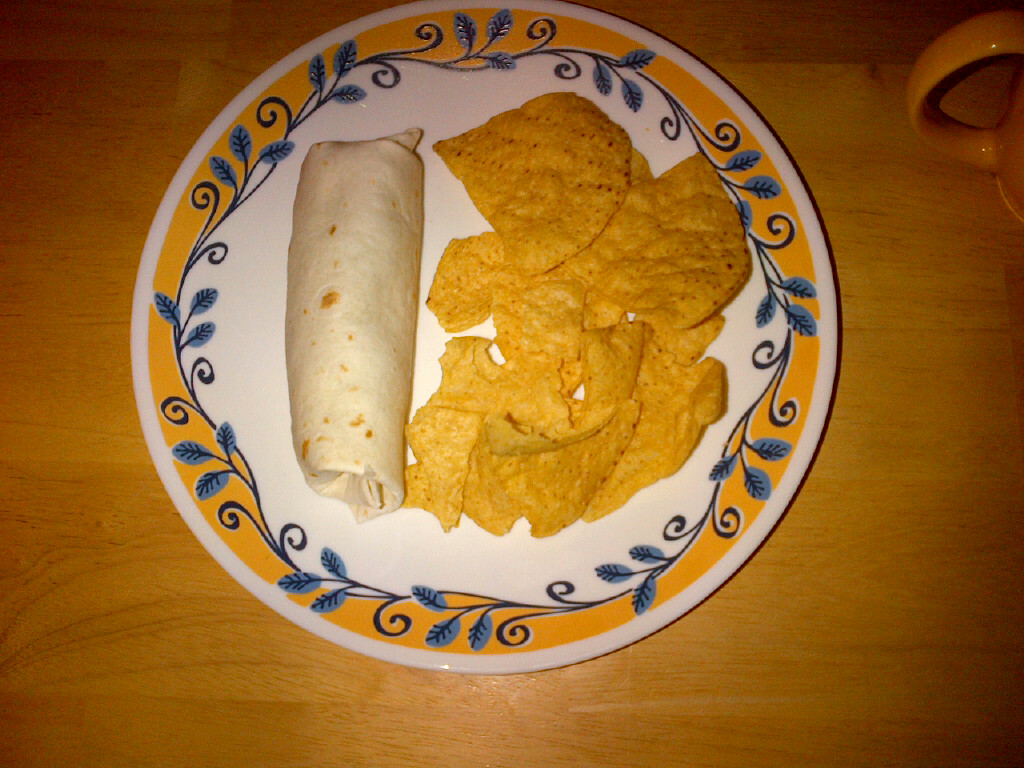
After shredding and ensuring the meat was shot-free, I placed in a skillet over medium heat and added a couple pats of butter, some chili powder, some more onion and some more chipotle seasoning and let it start to saute. I popped open a can of green chilies and drained them- then added the contents to the skillet. By this time the smell in the kitchen was incredible and I thought the dog would drown in his own drool. I heated a couple of tortillas and layered in some meat mixture with lettuce, taco sauce, some shredded cheese and a little bit of sour cream.


The Sharp-tail Taco- not the traditional way to eat a game bird but excellent nonetheless.

Wednesday, September 26, 2012

Bone Sour Shame

Anyone who has read my blog for any length of time, knows that I am first and foremost a table hunter and that I'm pretty much fanatical in my approach to field care of meat. I feel that once you shoot and kill an animal, you pretty much owe it to that animal to utilize the meat as efficiently as possible. Wasting game either through purpose or negligence is a shameful thing. In that vein, I'd like to share an experience I had recently.

After tipping over this year's first caribou, my family and I worked diligently and quickly to field dress and quarter the caribou and remove it from the field. The shot occurred at approximately 5:30p and by 7:00p I was packing it to the vehicle. An hour and a half from death to transport- cool temperatures and a stiff breeze had cooled the meat quickly- excellent. A two hour drive to my home (9:00p) and I took the meat, hung it and rinsed it with cold water and washed away all the blood and whatever minor debris it inevitably accumulates from field dressing. I also trimmed off a small amount of bloodshot meat and some miscellaneous fat and inedible bits. After the meat was clean, I hung it in my garage and placed a fan on the floor to keep a steady stream of cool air flowing over it all night. I finally retired to the shower at just after midnight.

I awoke the next morning, sore from previous day's hunt, and went to garage to check on the meat. It was cool, dry and the steady airflow had crusted the meat over beautifully. I made an appointment at the local game processor for the early afternoon to hang the meat and age it and then butcher the caribou into roasts, steaks and burger ready for freezing and storage and eventual consumption by my family. At the requested time (2:00p) I placed the pieces in clean game bags and transported it to the processor where it was tagged, weighed, and hung in a large commercial cooling unit. I've processed game in my home before and while home butchering is quite simple, it is time consuming and with my busier fall schedules the last few years it is simply more convenient to let the pros handle it. I turned the clean, cool meat over the processor and watched them move it into the cooler at 2:40p. A bit over 22 hours from the time the trigger was pulled and I feel like the care I gave the meat during the interim was about all I could have possibly done. I'm not worried about losing one scrap to improper field care. I tell you all this to set the stage for what I witnessed while waiting to check in my caribou and some of the horrendous mistakes I saw.

When I arrived at the processor, someone else was in front of me. The processing staff was bent over a large moose leg with a knife, going through repeated motions of cutting and smelling the meat. From the extreme scowl and the "not-so-friendly" exchange between the staff and the customer I knew I wanted to ease on up to the dock to try to get an idea of what was going on. The staff person had noticed an odd odor about the meat when the person brought it in and decided a thorough inspection was in order and questioned the hunter at length about the time of death, field care, etc. to get a better idea about what was going on biologically.

As the repeated tale went, the hunter and his partner saw two large (and legal) bulls together in a marsh one morning. Hunter One shoots Moose One and down it goes. Hunter Two then implores Hunter One to abandon his animal and pursue Moose Two. The pair pursue Moose Two over hill and dale and finally tip it over in a mini-fusillade of rifle fire in the afternoon. The pair then dress out Moose Two- which takes until dark. They then retired to camp for the night and return to Moose One the following morning...a full 24 hours after shooting it. I apologize if the flow is wrong since the entire exchange was too long and some of the details changed over the course, but this was the best I could decipher.

It biologically makes sense given that Moose One had lain all day in the sun and all night in the marsh. Not field dressed, not quartered, not anything. What I strongly speculate is this- the carcass hit the ground at it's normal body temperature. The moose's marvelous fur, location in a low area away from the breeze, and insulation from the earth by thick marsh grass ensured the meat cooled extremely slowly. Of more concern, the animals viscera and blood contain a lot of water so this warm, wet environment yielded the perfect environment for all the wee beasties living within the carcass to positively flourish. Not only flourish, but using the liquid medium of the moose's own juices spread throughout the carcass from hotter areas (near the core bones) all through the meat. The only pieces that may have escaped are the ones just under the "up" side hide that would have cooled a bit quicker while the hide was exposed to cooler night air. The process is known as "bone sour". It is devastating to edibility of the meat and just as remarkably simple to prevent.

What the processing staff found is that the hunter's inattention and slovenly practices had basically reduced several hundred pounds of wonderful meat to dog food.

I'll refer the reader to a previous piece I wrote on proper field care here. But the basics are that as quickly as you can remove the organs, entrails and blood. Next, remove the hide,quarter the animal, cool it and then get it the heck out of the field. When dealing with animals as large as moose, one at a time for the hunting party is certainly more than enough to attempt to handle- particularly in the early season.

Wednesday, September 19, 2012

The Revelation Knife


As you may have noticed by the little banner on the upper left, I am on field staff for a company called Real Avid. The company makes a selection of hunting and shooting accouterments. A few days after I signed the contract a neat little package arrived in the mail containing their signature product- the Revelation Knife with instructions to take it out and get it dirty. That I could do.

The following weekend I took my neighbor out on a caribou hunt and we were quite fortunate after a long day of stalking caribou and seeing them in the hundreds- to finally close the distance on a good sized cow. My neighbor made a stunningly skillful (or stunningly lucky) 309 yard neck shot and neatly dropped the caribou instantly into a pile. Turns out I'd get to try that knife out after all!


The knife has a couple of LEDs built into the handle that illuminates the cutting edge of the blade (hence the moniker- Revelation). Purpose built for those times when you drop an animal at the productive times at last light, it neatly solves the problem of putting some light on the task of field dressing your animal. I've done this task with a flashlight clenched in my teeth and while wearing a headlamp as well as by the beams of various vehicles- none are ideal since all methods leave a lot of shadows on your subject. Far from just a nuisance, wielding sharp knives in places you can't see can often result in whittling on your own digits- a bad deal.


Since we'd dropped this caribou at 5:30 in the afternoon and had three hours until dark, it was unlikely that we'd be able to take advantage of the lights to their fullest but we'd give the rest of the knife a workout. Some initial impressions are the knife appeared well made for it's modest MSRP and while 440C stainless isn't my favorite blade steel, it is entirely up to the task of a hunting knife. It was also quite sharp out of the box and noticeably absent was the incredibly annoying "wire edge" so prevalent on a factory sharpened knife. Just a good working edge was there. The handle was made of some type of polymer with a slightly tacky feel that provided good grip- even wet or bloody. At the pommel was a small threaded plug that contained the battery pack for the light and on the scale side was a small button that turned the LEDs on and off. The sheath was a rather simple (and effective) pouch style made from nylon and plastic.


We easily made the initial incisions and after using a bone saw to cut through the sternum, activated the lights to make the often difficult cuts around the diaphragm. My partner was only slightly experienced so being able to see what he was doing was a real confidence booster. In just a few minutes he had the internal organs removed cleanly. At this point we started skinning the animal and the drop point blade made efficient work of the task and we quickly had an entire side complete. The blade easily separated the front quarter and we placed it in a game bag. We went to work on the rear quarter and the blade stood up to the often rigorous wrenching required to separate the ball joint without damage- I've broken two knives doing such work so it didn't pass without note. We filleted out the tenderloin and backstrap and we were ready to flip and repeat.

Despite the foul weather and high winds, after only about an hour or so we had the caribou broken down into two manageable bundles and ready to pack out the half mile or so to our boat. After butchering the entire caribou with little additional tooling except a bone saw, the edge remained sharp enough to butcher another one without resharpening. I generally think the ability to butcher one big game animal without retouching is quite sufficient and this one passed the test with flying colors.


My only complaint with the knife (and I've shared the commentary with the makers) is that the black handled knife disappears easily in the field- I much prefer that sort of tool to be in a blaze orange color for easy location during use and to prevent loss...but that'll be a topic for my next post.

Per Real Avid- The Revelation knife is available at Wal-Mart, Dick's Sporting Goods, and (of course) the Real Avid website if you'd like one of your own. I would expect other retailers to pick it up in due course as well.

Monday, September 10, 2012

Cover That Muzzle!


A sharp-eyed reader wrote to me after my last piece and asked what was wrong with my muzzle in the original of the above photo.

In short, the answer is "Nothing". That appendage on the end of my rifle barrel is good old electrical tape. "Why" you may ask?

Simple- to keep unwanted stuff out of the muzzle of my rifle. Hunting is often a very sloppy affair- water, snow, mud, sand, glacial silt and all kinds of other detritus just wait out there in the wilds to lodge themselves in the barrel of your rifle. If you're unlucky enough to actually pull the trigger on your rifle with debris in the barrel you could (at a minimum) damage the barrel of your rifle or (at worst case)   burst the barrel and injure you.

The fix is easy. Take a 1.5" piece of electrical tape and put it over the muzzle. Take a 3" piece and wrap it around the barrel to secure the first piece in place. Now your rifle is protected from getting stuff in it you'd rather not have.

Years ago as a teen, I dropped my 30-30 while descending a small bluff. The rifle fell about 15' straight down and stuck itself stock up in the E. Tennessee red clay mud. The bore was hopelessly clogged with mud and every effort I made to remove it in the field was in vain. Hunt OVER.

Just last year I was hunting with a friend on a winter caribou hunt when he rolled his snow machine and (unbeknown to him) filled the barrel with snow. That snow melted from some heat source (snow machine, body heat we have no idea) and the melt water ran down into the action and refroze on the bolt face and chamber. A few hours later we spotted a wolf resting in a clearing- my partner attempted to chamber a round and couldn't close the bolt. It took a few minutes to diagnose the problem and even longer to try to fix it with a lighter. By the time the rifle was back in action the wolf was long gone.

In either of the above instances- firing the rifle with the obstructed bore could have been catastrophic. Firing your rifle with tape over the muzzle isn't dangerous- the escaping gas and bullet easily bursts through the layer of tape and it doesn't appreciable change the point of impact of the rifle. After firing you can unwrap the second piece of tape, remove the burst first piece and discard then tear the longer second piece in half and protect the muzzle again. As a bonus, the tape can also protect the rifle's crown from damage which will ruin your rifle's accuracy permanently until the ministrations of a gunsmith cure it and lighten your wallet in the process.

Tape. Simple fix to keep your rifle in action under trying conditions.